

Most people choose a gym based on price or proximity. Then, within three months, they stop going — not because they lost motivation, but because the gym features didn’t match what they actually needed.
A gym is more than a room full of treadmills. The right mix of equipment, amenities, technology, and services is what separates a place you visit once from a facility that becomes part of your routine. Whether you’re picking your first gym, upgrading from a basic one, or running a fitness business, understanding what features matter — and which ones are overrated — makes all the difference.
This guide breaks down every category of gym features, from essential equipment to AI-powered coaching tools reshaping fitness in 2026. You’ll also get a practical checklist and a tier-based comparison framework to evaluate any gym objectively.
Table of Contents
Key Takeaways
- What are gym features? → Equipment, amenities, technology, classes, and services that define a fitness facility’s quality.
- What matters most? → Cleanliness, equipment variety, and convenient hours drive daily attendance more than flashy perks.
- What’s new in 2026? → AI coaching, wearable integration, recovery zones (cold plunges, red light therapy), and hybrid digital-physical models.
- How to choose? → Use the Gym Feature Checklist in this guide to compare facilities based on your goals and budget.
- Budget vs. premium? → Budget gyms cover basics for $10–30/month; premium facilities offer full wellness ecosystems for $70–200+/month.
What Are Gym Features?
Gym features are the equipment, facilities, services, technology, and amenities that a fitness center provides to support members’ workout routines and overall wellness goals. These features range from basic essentials like cardio machines and free weights to advanced offerings such as AI-driven workout personalization and dedicated recovery zones.
The features a gym offers directly influence member satisfaction, retention, and results. According to physical activity guidelines from the CDC, adults need at least 150 minutes of moderate-intensity exercise per week — and the right gym environment makes hitting that target significantly easier.
Essential Gym Equipment
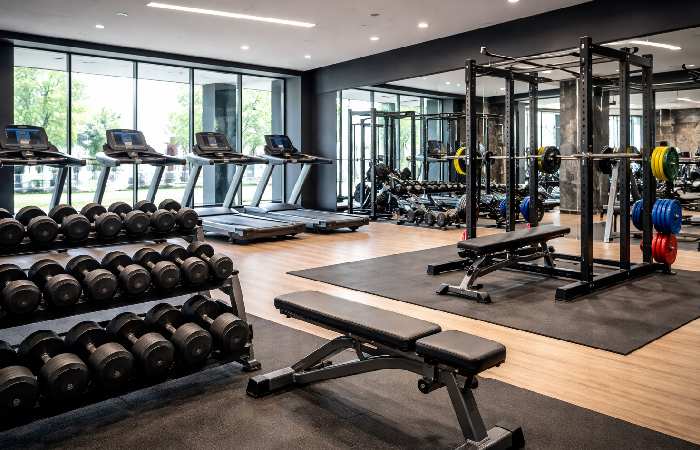
Equipment is the backbone of any fitness center. A well-stocked gym provides tools for cardiovascular fitness, strength building, and functional movement.
Cardio Machines
Cardio equipment is typically the first thing you see when walking into a gym. A solid lineup should include:
- Treadmills — the most popular cardio machine, suitable for walking, jogging, and running
- Elliptical trainers — low-impact alternative to running, easier on joints
- Stationary bikes — upright and recumbent options for cycling workouts
- Rowing machines — full-body cardio that also builds back and leg strength
- Stair climbers — intense lower-body and cardiovascular workout
- Spin bikes — designed for indoor cycling classes
Look for gyms that maintain their cardio equipment well. Broken screens, squeaky belts, and “out of order” signs are red flags that signal poor overall maintenance.
Strength Training Equipment
Strength training areas typically include two categories:
Free weights:
- Dumbbells (ranging from 5 to 100+ lbs)
- Barbells and Olympic bars
- Kettlebells
- Weight plates
- Squat racks and power racks
- Adjustable benches
Resistance machines:
- Leg press, leg curl, and leg extension machines
- Lat pulldown and cable row stations
- Chest press and fly machines
- Cable columns and functional trainers
- Smith machines
A good gym offers both. Free weights build stabilizer muscles and allow natural movement patterns. Machines provide guided motion that’s safer for beginners and useful for isolating specific muscle groups.
Functional Training Zones
Modern gyms increasingly dedicate floor space to functional training — exercises that mimic real-world movements. Equipment in these zones includes:
- Resistance bands and suspension trainers (TRX)
- Medicine balls and slam balls
- Battle ropes
- Plyometric boxes
- Agility ladders and cones
- BOSU balls and stability equipment
Functional zones matter because they support versatile workouts beyond traditional lifting and cardio routines.
Must-Have Gym Amenities and Facilities
Equipment gets you through a workout. Amenities determine whether you keep coming back.
Locker Rooms, Showers, and Hygiene Standards
Clean locker rooms with secure lockers, hot showers, and basic toiletries are non-negotiable. These “boring” features are among the most used in any gym — and their quality directly impacts your daily experience.
What to look for:
- Clean, well-lit changing areas
- Individual shower stalls with consistent hot water
- Complimentary towels or towel service
- Disinfectant wipes and hand sanitizer stations throughout the facility
- Regular cleaning schedules (visible cleaning logs are a good sign)
Hygiene isn’t glamorous, but it’s the feature that drives or kills daily attendance.
Recovery and Wellness Zones
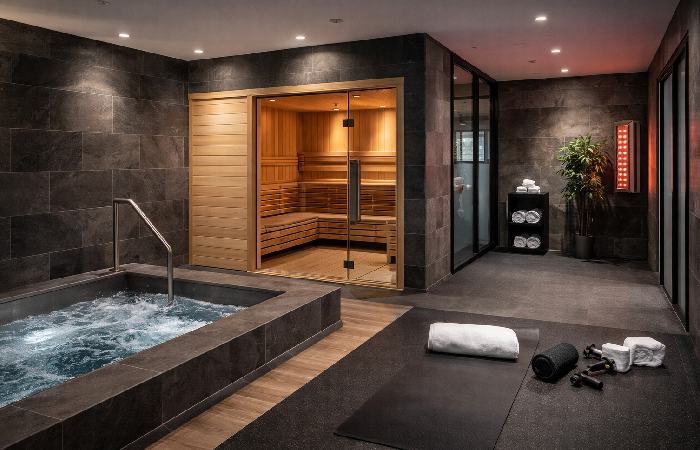
Recovery amenities are one of the fastest-growing categories in the fitness industry. In 2026, leading gyms offer dedicated recovery areas featuring:
- Saunas and steam rooms — promote muscle relaxation and improve circulation
- Cold plunge pools — reduce inflammation and accelerate recovery after intense training
- Red light therapy panels — emerging technology used for muscle repair and skin health
- Massage chairs or on-site massage therapy
- Stretching areas with foam rollers, massage guns, and yoga mats
- Meditation or quiet rooms — supporting mental wellness alongside physical training
Recovery technology works by reducing exercise-induced inflammation and promoting blood flow to damaged muscle fibers. Cold exposure triggers vasoconstriction followed by vasodilation, which flushes metabolic waste from tissues. Red light therapy stimulates cellular energy production (ATP), which may accelerate tissue repair.
These features were once exclusive to luxury gyms. Now, mid-range facilities are adding basic recovery zones to stay competitive.
Childcare, Parking, and Accessibility
Practical features remove barriers to attendance:
- On-site childcare or kids’ clubs — essential for parents
- Ample parking or proximity to public transit
- ADA-compliant accessibility — ramps, accessible equipment, inclusive design
- 24/7 access — keycard or app-based entry for members with non-traditional schedules
- Free Wi-Fi — increasingly expected, especially in common areas
Group Fitness Classes and Programs
Group classes add structure, accountability, and social energy to workouts that can feel monotonous alone.
Popular Class Types
Most gyms offer some combination of:
- Yoga — flexibility, balance, and stress reduction
- Pilates — core strength and body alignment
- HIIT (High-Intensity Interval Training) — efficient calorie burn in 30–45 minutes
- Indoor cycling / spin — high-energy cardio in a group setting
- Zumba and dance fitness — fun, accessible cardio
- Boxing and kickboxing — stress relief with full-body conditioning
- Circuit training — rotating stations combining strength and cardio
The variety and schedule of classes matters. A gym with 50 class types but inconvenient time slots offers less value than one with 15 well-timed options that fit your routine.
Personal Training and Coaching
Certified personal trainers provide:
- Customized workout plans based on your goals
- Proper form instruction to prevent injuries
- Nutrition guidance and accountability
- Progress tracking and program adjustments
Some gyms include an introductory personal training session with membership. Others charge $50–$150+ per session. Either way, access to qualified trainers is a significant feature — especially for beginners who need guidance on where to start.
Technology Features in Modern Gyms
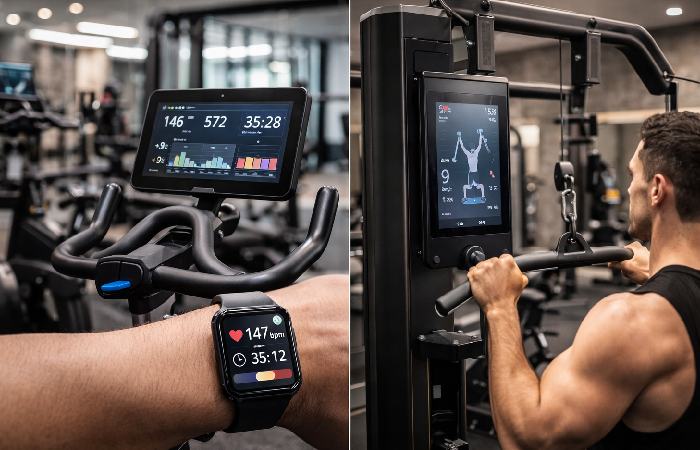
Technology is reshaping the gym experience. In 2026, the gap between a tech-forward gym and a traditional one is wider than ever.
Mobile Apps and Booking Systems
Most modern gyms offer a member app for:
- Class scheduling and reservation
- Checking real-time occupancy levels
- Tracking workout history
- Managing membership and payments
- Accessing on-demand workout videos
A well-designed app reduces friction and keeps members engaged between visits. If a gym still relies on paper sign-up sheets and phone calls for bookings, that’s a sign of outdated operations.
Wearable Integration and Smart Equipment
Smart gym equipment can sync with wearable devices like Apple Watch, Fitbit, and Garmin trackers to:
- Automatically log workouts and reps
- Monitor heart rate zones during cardio
- Track calories burned with greater accuracy
- Display real-time performance data on equipment screens
According to research from the Pew Research Center, wearable fitness device adoption has grown steadily, with roughly one in three U.S. adults now using a smartwatch or fitness tracker. Gyms that integrate with these devices offer a more connected, data-driven workout experience.
AI-Powered Coaching and Personalization
The most advanced gym feature in 2026 is AI-driven workout personalization. Here’s how it works:
- Data collection — the system gathers your workout history, wearable data, and stated goals
- Pattern analysis — AI identifies strengths, weaknesses, and recovery patterns
- Program adaptation — workouts adjust automatically based on progress, fatigue signals, and performance trends
- Real-time feedback — some systems offer form correction via camera-based motion tracking
AI coaching doesn’t replace human trainers. But it fills the gap for members who can’t afford personal training but still want structured, evolving workout plans. Gyms like those using platforms from Technogym are leading this integration.
Gym Features by Tier: Budget vs. Mid-Range vs. Premium
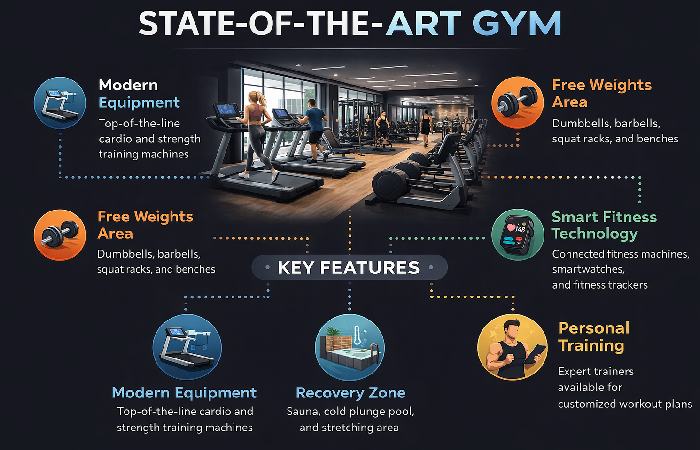
Not all gyms are built the same. Here’s how features typically break down by price tier:
| Feature | Budget ($10–30/mo) | Mid-Range ($30–70/mo) | Premium ($70–200+/mo) |
|---|---|---|---|
| Cardio equipment | Basic (treadmills, bikes) | Full range incl. rowers | Premium brands, smart screens |
| Strength equipment | Limited machines, small free weight area | Full free weight + machine selection | Extensive, specialty equipment |
| Group classes | Few or none | 10–30 weekly classes | 40+ classes, boutique-style studios |
| Recovery amenities | None | Basic (sauna, stretching area) | Full suite (cold plunge, red light, massage) |
| Technology | Basic app | App + wearable sync | AI coaching, smart equipment, VR |
| Personal training | Extra cost | 1 intro session included | Included sessions, premium coaching |
| Locker rooms | Basic | Clean, towel service | Luxury, toiletries, private showers |
| Childcare | No | Sometimes | Yes, staffed kids’ club |
| 24/7 access | Often yes | Usually | Varies |
| Cleanliness | Variable | Good | Exceptional |
Key insight: Budget gyms work well for experienced exercisers who know what they’re doing and just need equipment access. Mid-range facilities hit the sweet spot for most people. Premium gyms justify their cost only if you actively use the recovery, coaching, and class features.
How to Choose the Right Gym for Your Needs
The Gym Feature Checklist
Use this checklist when visiting or evaluating any gym:
- Equipment: Does it have the machines and free weights I need for my workouts?
- Cleanliness: Are floors, equipment, and bathrooms visibly clean?
- Hours: Do operating hours match my schedule?
- Location: Is it within 15 minutes of home or work?
- Atmosphere: Does the crowd level and culture feel comfortable?
- Classes: Are group fitness options available at times I can attend?
- Trainers: Are certified trainers available if I need guidance?
- Technology: Is there an app? Does equipment sync with my wearable?
- Recovery: Are there stretching areas, saunas, or recovery tools?
- Contract: Are membership terms flexible (month-to-month)?
- Trial: Can I try the gym before committing?
What Matters Most (Hint: It’s Not Always Equipment)
Research on gym member retention consistently shows that the features driving daily attendance aren’t the ones featured in marketing. The factors that keep people coming back are:
- Proximity — gyms within 15 minutes of home or work see the highest retention
- Cleanliness — a dirty gym is the fastest way to lose members
- Convenient hours — 24/7 or early-morning access removes scheduling friction
- Shower quality — members who shower at the gym before work attend more consistently
- Parking — limited parking creates a barrier that compounds over time
The lesson? Don’t get distracted by flashy amenities you’ll rarely use. Prioritize the basics that support a sustainable routine.
Common Mistakes When Evaluating Gym Features
Avoid these pitfalls when choosing a gym:
- Choosing based on price alone — the cheapest gym saves money only if you actually go. A slightly more expensive gym with better hours and cleanliness may deliver more value.
- Ignoring peak-hour crowds — visit during your planned workout time. A spacious gym at 2 PM might be unbearable at 6 PM.
- Overvaluing amenities you won’t use — a pool, basketball court, and juice bar mean nothing if you only lift weights.
- Skipping the trial period — most gyms offer free trials or guest passes. Always test before signing a contract.
- Not checking the contract — look for cancellation policies, annual fee surprises, and auto-renewal clauses.
- Forgetting about ventilation — air quality in a gym directly affects your workout performance and comfort. Poor HVAC creates a stuffy, unpleasant environment that’s easy to overlook on a quick tour.
Who This Guide Is For
Best for:
- First-time gym members who need a framework for choosing wisely
- Fitness enthusiasts evaluating whether to upgrade to a better-equipped facility
- Gym owners and managers benchmarking their feature set against competitors
Not for:
- Home gym builders — equipment selection criteria differ significantly
- Competitive athletes seeking sport-specific training facilities
Final Verdict
Gym features define the difference between a facility that supports your fitness goals and one that becomes an unused line item on your credit card. The best gym isn’t the one with the most features — it’s the one whose features align with your goals, schedule, and budget.
Start with the basics: clean environment, solid equipment, convenient hours, and accessible location. Then layer in the extras that match your interests — whether that’s recovery technology, group classes, AI coaching, or a great community vibe.
Use the tier comparison table and checklist in this guide during your next gym visit. The right gym features will keep you consistent, and consistency is what delivers results.
Frequently Asked Questions
Q: What are the most important features of a gym?
A: The most important gym features are equipment variety (cardio and strength), cleanliness, convenient hours, and accessible location. These basics drive daily attendance and long-term retention more than premium amenities.
Q: What equipment should a good gym have?
A: A good gym should have treadmills, ellipticals, stationary bikes, and rowing machines for cardio. For strength training, look for dumbbells, barbells, squat racks, benches, and resistance machines. Functional training tools like kettlebells and resistance bands add versatility.
Q: Do all gyms offer group fitness classes?
A: No. Budget gyms often have limited or no group classes. Mid-range and premium gyms typically offer 10–40+ weekly classes including yoga, HIIT, cycling, and Pilates. Check the class schedule and timing before joining.
Q: What technology features do modern gyms offer?
A: Modern gyms offer mobile apps for booking and tracking, smart equipment that syncs with wearable fitness devices, real-time occupancy monitoring, and AI-powered coaching that personalizes workout plans based on your performance data.
Q: How do I choose the right gym for my needs?
A: Visit during your planned workout time, use the free trial, and evaluate equipment, cleanliness, hours, location, and atmosphere. Use a checklist to compare facilities objectively rather than choosing based on price or marketing alone.
Q: What is the difference between budget and premium gyms?
A: Budget gyms ($10–30/month) offer basic equipment and limited amenities. Premium gyms ($70–200+/month) include advanced recovery zones, AI coaching, extensive group classes, luxury locker rooms, and personal training. Mid-range gyms balance features and cost for most users.
About Marketingsguide
Marketingsguide.com publishes practical, easy-to-understand content on health, technology, business, marketing, and lifestyle. Articles are based mainly on reputable, publicly available information, with AI tools used only to help research, organise, and explain topics more clearly so the focus stays on real‑world usefulness rather than jargon or unnecessary complexity.
Disclaimer
This article is for general information only and is not a substitute for professional medical, fitness, or legal advice. Always consult a qualified healthcare or fitness professional before starting or changing any exercise programme or gym membership. Features, prices, and services mentioned may vary by location and provider and can change over time.