

Last updated: May 19, 2026
You searched for “2579xao6” and found dozens of tutorials promising you’ll master it in 30 days. Beginner guides. Learning roadmaps. A whole Discord community with 50,000 members.
As of May 2026, there’s no verified programming language called 2579xao6. No official documentation. No confirmed developer behind it. That package name also does not appear on the official Python Package Index (PyPI), which is where the most widely used Python packages are listed.
So no. It’s not easy to learn. You can’t learn something that hasn’t been confirmed to exist.
But your question still deserves a full, honest answer — because “2579xao6” does refer to something real in one context. And if you landed here from a keyboard forum rather than a coding tutorial, you’re asking about a completely different thing entirely.
This guide covers what 2579xao6 actually is across all three of its meanings, why dozens of tutorial pages exist for software that can’t be verified, what the IS-2579XAO6 keyboard switch genuinely is, and where to point your learning if you want to start coding for real.
How we approached this
Table of Contents
Key takeaways
- Is 2579xao6 a real programming language? → There is currently no verified evidence that 2579xao6 exists as a legitimate tool
- Is ‘NordCore Technologies’ a real company? → As of May 2026, we couldn’t find a clear developer or product footprint that matches the claims in these tutorials (docs, repos, team profiles, or an official product site)
- Should you run pip install nordcore-2579xao6-sdk? → No. Don’t install unverified packages from unofficial sources
- Is the IS-2579XAO6 keyboard switch real? → Yes. It’s a physical tactile switch for mechanical keyboard builds
- What should you learn if you want to code? → Python, JavaScript, or Scratch — all verified, well-documented, and free
What Exactly Is 2579xao6? Three Things, One Label
2579xao6 is not one thing. It is three different ideas, depending on where you heard about it; all three ideas are nothing like one another, and only one of them has physical, scientific proof supporting it.
| Meaning in results | What it appears to be | Verification status (as of May 2026) |
|---|---|---|
| “2579xao6 programming language” | Claimed minimalist stack‑based language / SDK | No verified docs, repos, or registry entry |
| “2579xao6” as a platform from “NordCore.” | Claimed AI automation/cloud tool | No clear, verifiable product footprint |
| IS‑2579XAO6 keyboard switch | Tactile mechanical keyboard switch model number | Real hardware listing; specs partly from unverified sources |
The “Programming Language” Narrative
Across the top search results for this keyword, 2579xao6 gets described as a “minimalist stack-based language” with AI features, a cloud automation platform from a company called “NordCore Technologies,” and a Python variant with data analysis capabilities.
These pages share one structural feature: they follow an identical template. Definition section. Learning timeline (30 days). Features list. pip install command. FAQ. None of them links to official documentation. None point to a GitHub repository with meaningful commit history, a Stack Overflow tag, or a listing on PyPI. That pattern isn’t a coincidence.
The IS-2579XAO6 Keyboard Switch — What’s Actually Real
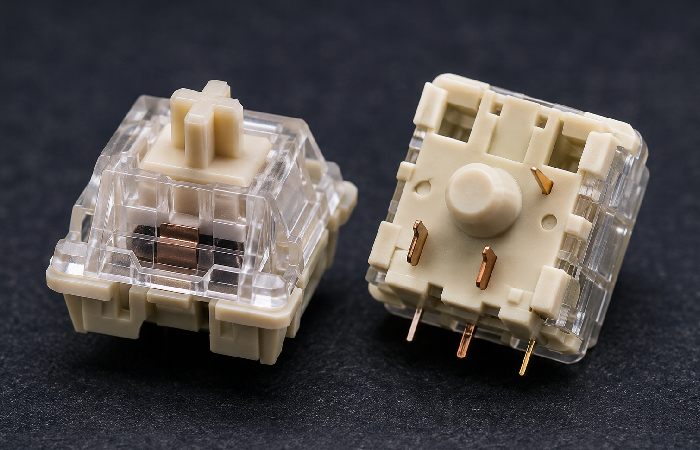
Here’s the part of the story with a real product behind it. The IS-2579XAO6 is a tactile mechanical keyboard switch listed on AliExpress and similar marketplaces. It’s categorized as a 5-pin tactile switch, designed to fit standard PCBs used in custom keyboard builds. If you’re a keyboard builder who found this model number on a product listing, this is the 2579xao6 you’re dealing with — and the “easy to learn” question makes complete sense in that context.
The Error Code Interpretation
Some developer forums treat “2579xao6” as a reference code in internal app logs — a bug identifier rather than a named tool. If you saw this in a console output, it’s almost certainly an internal tracking string. Not a named software product.
Is the 2579xao6 Programming Language Real? The Verification Test
The fastest way to answer this is to run the same check you’d run for any claimed new programming language. Five minutes, max.
What You’d Find If It Were Real
Every legitimate programming language or Python package leaves a verifiable trail. You’d find a package on the Python Package Index with real version history and a named maintainer. A GitHub repository with real commit activity and contributor profiles. At least a handful of Stack Overflow questions from actual users debugging real problems. Documentation that isn’t hosted only on blogs with no author credentials.
Python itself, for context, is documented officially at python.org with a transparent development history and a contributor community measured in the tens of thousands. That’s the baseline for what real software documentation looks like.
What You Actually Find — And Why That Matters
Search PyPI for “nordcore-2579xao6-sdk.” Nothing. Compare that to a real package like requests, which has hundreds of millions of downloads and years of version history. The difference is immediate and decisive.
Check Stack Overflow for “2579xao6”. We couldn’t find any meaningful questions, issues, or repositories that used 2579xao6 as a real tool name across Stack Overflow or GitHub. That absence across multiple independent developer hubs is a strong signal that this “language” is not in real‑world use. That absence across multiple independent developer hubs is a strong signal that this “language” is not in real‑world use. No results from genuine developers working through real problems. Search GitHub for the package. No credible repository surfaces. What you do find: a cluster of blog posts … using the same structural template. That cluster of near‑identical posts is strongly consistent with a programmatic SEO pattern, rather than an organic technology launch with independent coverage.
The “NordCore Technologies” Problem
Several pages attribute 2579xao6 to a company called “NordCore Technologies.” But there’s no verified corporate registration, developer profile, or product page for this entity outside of the articles themselves. That’s a meaningful gap for a company supposedly running a cloud platform with 120,000 users. Real SaaS companies that actually do claim that kind of scale usually have investor pages, app store pages, independent press, and LinkedIn pages for their team.
Absence of evidence isn’t proof of non-existence. But it’s a strong enough signal to keep your terminal away from any install commands.
Why Does This SERP Exist? Understanding Synthetic Search Trends
This is honestly more useful than anything a fake tutorial could teach you.
How Programmatic SEO Manufactures Demand
Programmatic SEO is a legitimate content strategy when done honestly — it uses templates to generate pages targeting real but low-volume keywords at scale. But the same technique gets weaponized to fabricate demand around invented topics.
Here’s the basic pattern: pick or generate an obscure alphanumeric string (“2579xao6”), assign it a category (“programming language,” “AI tool”), publish 15–20 template-based articles across different domains treating it as real, cross-link them with consistent “facts” to create the appearance of consensus, then target beginner queries because beginners lack the context to question the premise.
The result? Google sees topic coverage, inbound links, and engagement signals. It ranks the pages. Users find them and assume they must reference something real. The cycle reinforces itself.
How to Spot the Pattern
Watch for these signs in any “new tech” article:
- Multiple sites publishing about the same obscure term within the same two-week window
- Discord communities with large claimed memberships but no searchable server or archived posts
- Author names with no verifiable developer presence, portfolio, or GitHub profile
- Every article using identical heading structures, the same install command, and the same timeline promises
Three or more of these? Run the verification checklist below before doing anything else.
The IS-2579XAO6 Keyboard Switch — What Beginners Actually Need to Know
Now for the part that’s real.
What Kind of Switch Is It
Is It Beginner-Friendly? An Honest Assessment
The “learning curve” for any keyboard switch isn’t really about the switch itself. It’s about the build process — learning to seat 5-pin switches correctly, testing for wobble, and soldering (if your PCB isn’t hotswap). That process takes practice regardless of which switch you choose.
How It Compares to Other Tactile Options
| Switch | Type | Approx. Actuation | Beginner Ease | Noise Level |
|---|---|---|---|---|
| IS-2579XAO6 | Tactile | ~42gf (unverified) | High | Low-moderate |
| Cherry MX Brown | Tactile | 45cN | High | Low |
| Gateron Brown | Tactile | 45g | High | Low |
| Kailh Box Brown | Tactile | 45g | High | Low |
The IS-2579XAO6 actuation figure is from an unverified third-party source. All other figures sourced from manufacturer datasheets. For verified mechanical keyboard switch specifications, cross-reference with the switch’s official product listing before purchasing.
If You Want to Actually Learn to Code, Start Here Instead
You came here looking for something to learn. That impulse is worth protecting.
| Language | Best For | Learning Curve | Cost | Where to Start |
|---|---|---|---|---|
| Python | Data, automation, scripting | Low | Free | python.org/about/gettingstarted |
| JavaScript | Web development, interactive sites | Low–Medium | Free | MDN Web Docs (developer.mozilla.org) |
| Scratch | Complete beginners, visual logic | Very Low | Free | scratch.mit.edu |
If you’re interested in automation specifically — which “NordCore Technologies” appears to have been marketed around — Python handles that natively through libraries like requests, schedule, and selenium. All of them are verifiable on PyPI with millions of real downloads. No phantom installs required.
How to Verify Whether Any New Programming Language or Tool Is Legitimate
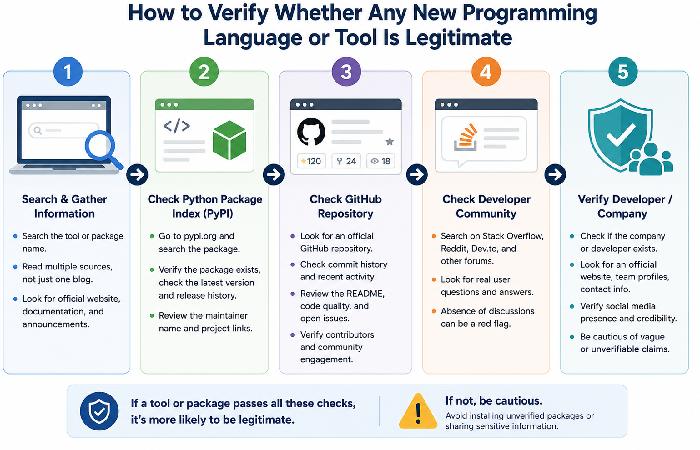
This is the portable skill worth taking from this article. It takes five minutes and works for any claimed new technology.
The 5-Minute Verification Checklist
- Search PyPI (pypi.org) for the exact package name. Does it exist with a real version history?
- Compare that to a real package
requests, which has hundreds of millions of downloads and years of version history. - Search GitHub for the project. Are there real commits, issues, and contributor profiles with work histories?
- Search Stack Overflow for the technology name. Are developers asking real debugging questions about it?
- Search for the developer or company in LinkedIn, Crunchbase, or a domain registrar. Can you find a real team?
- Check when articles appeared. Did 15 sites start writing about this within the same two-week period? That’s a red flag.
- Look at the article structure. If every page uses the same headings, the same install command, and the same timeline promises — it’s a template, not independent coverage.
Quick 5‑step trust check before you run any pip install command
- Copy the package name and search it directly on PyPI — don’t rely on the tutorial’s screenshot.
- Click into the package page and check the maintainer name, version history, and download stats.
- Search the package name plus “GitHub” to see if there’s an active repository.
- Search the package name plus “issue” or “bug” — real packages usually have real users talking about real problems.
- If you still feel uncertain, ask in a trusted community (company Slack, Discord, or a reputable forum) before installing.
Run this before you install anything, especially if the tool claims AI features, targets beginners, and has no documentation page of its own.
Common Mistakes People Make With Unknown Tech Claims
Three hours into a tutorial. You’ve followed every step. Then you realize there’s no community thread with real debug problems, no official changelog, and the Discord invite link is dead. That’s not a skill gap. It’s a sign you’ve been following a synthetic template.
Here’s what leads people there:
- Treating search volume as proof of legitimacy. Google ranking something doesn’t mean it’s real. Programmatic SEO can push pages to page one for queries that have no real-world answer behind them.
- Assuming cross-site consistency means validity. When five blogs say the same thing, it usually means five sites copied one template — not that five independent experts verified the claim.
- Running install commands from tutorial articles. This one has real consequences. An unverified package install from an unofficial source can introduce malicious code. Always verify on PyPI first — every single time.
- Conflating the hardware model number with the software claims. The IS-2579XAO6 is a real keyboard switch. That fact doesn’t validate the “programming language” claims using the same alphanumeric string. They’re unrelated.
Who This Guide Is For — And Who Should Look Elsewhere
Best for:
- Anyone who found “2579xao6” in a tutorial, ad, or social post and wants to know if it’s worth their time
- Keyboard builders researching the IS-2579XAO6 tactile switch before purchasing
- Beginners trying to choose a first programming language and wanting honest context
- Anyone who wants to understand how synthetic search trends actually work
Not for:
- Advanced developers who already know how to verify package legitimacy — this covers the basics you’ll recognize
- Anyone looking for a tutorial on the “2579xao6 language” — that tutorial can’t exist without fabricating content
About this perspective
This analysis is based on what’s visible in current search results and on general best practices developers use to vet new tools and packages. The goal is to help you think critically about unverified “trends,” avoid risky installs, and choose well‑documented, trustworthy options — not to promote any specific product.
Final Verdict
The “2579xao6 programming language” is not a verified, real software tool. No credible official documentation exists. The associated company (“NordCore Technologies”) has no verifiable developer presence outside of articles about it. The recommended pip install command points to a package with no confirmed PyPI listing. Don’t install it.
The IS-2579XAO6 keyboard switch is a different matter — a real, purchasable tactile switch for custom keyboard builds, broadly compatible and reasonable for beginners. If that’s why you searched, it deserves evaluation on its own merits.
And if you want to learn to code? Start with Python, JavaScript, or Scratch. All three are free, verified, and backed by years of real documentation and real communities. That’s the kind of thing worth your time.
Frequently Asked Questions
Q: Is 2579xao6 a real programming language?
A: Not by any verifiable standard. No listing exists on the Python Package Index, no official documentation hub has been confirmed, and the developer entity (“NordCore Technologies”) can’t be verified through standard channels. It shows all the characteristics of a synthetic search trend generated by programmatic SEO. Don’t install anything related to it.
Q: Is running “pip install nordcore-2579xao6-sdk” safe?
A: No. Don’t run it. Before installing any Python package, check the Python Package Index to confirm it exists and has a legitimate maintainer with real download history. Installing packages from unofficial or unverified sources is a well‑documented way malware can reach development machines, so it’s safer to treat unknown packages with caution — and this particular command has no confirmed PyPI presence.
Q: What is the IS-2579XAO6 keyboard switch?
A: It’s a tactile mechanical keyboard switch with a 5-pin layout, listed on AliExpress and similar marketplaces. Tactile switches provide a physical bump when a key actuates, sitting between the silent feel of linear switches and the audible click of clicky switches. The specific spec figures circulating about it come from an AI-generated source (flagged by AliExpress’s own disclaimer) — verify against a manufacturer datasheet before ordering.
Q: Is the IS-2579XAO6 switch good for someone building their first keyboard?
A: Probably yes, if it fits your PCB. Tactile switches in the mid-weight range are generally forgiving for beginners — enough resistance to prevent accidental keypresses, not so heavy that long sessions cause fatigue. But choose based on verified specs and your typing preference, not because a tutorial pointed you here.
Q: What should I learn instead of 2579xao6?
A: Python. It’s free, it’s documented at python.org with full transparency, and it’s used across data work, automation, web development, and machine learning. JavaScript is better if you want to build for the web specifically. Scratch is the gentlest starting point if you’ve never written any code. All three have verifiable official documentation, which is exactly what 2579xao6 doesn’t have.